Skip to content
zMed

One platform · One record · One audit log

Critical-care automation for hospitals — from ICU to OR, ER, ambulance, and Tele-ICU.

One live record built from medical devices, clinical workflows, orders, scores, alerts, and audit logs — around the devices you already own.

Self-serve — a live demo unit in minutes. No procurement, no card.

300,000+ critical-care patients cared for on zMed

app.zmed.tech/icu/live-monitor
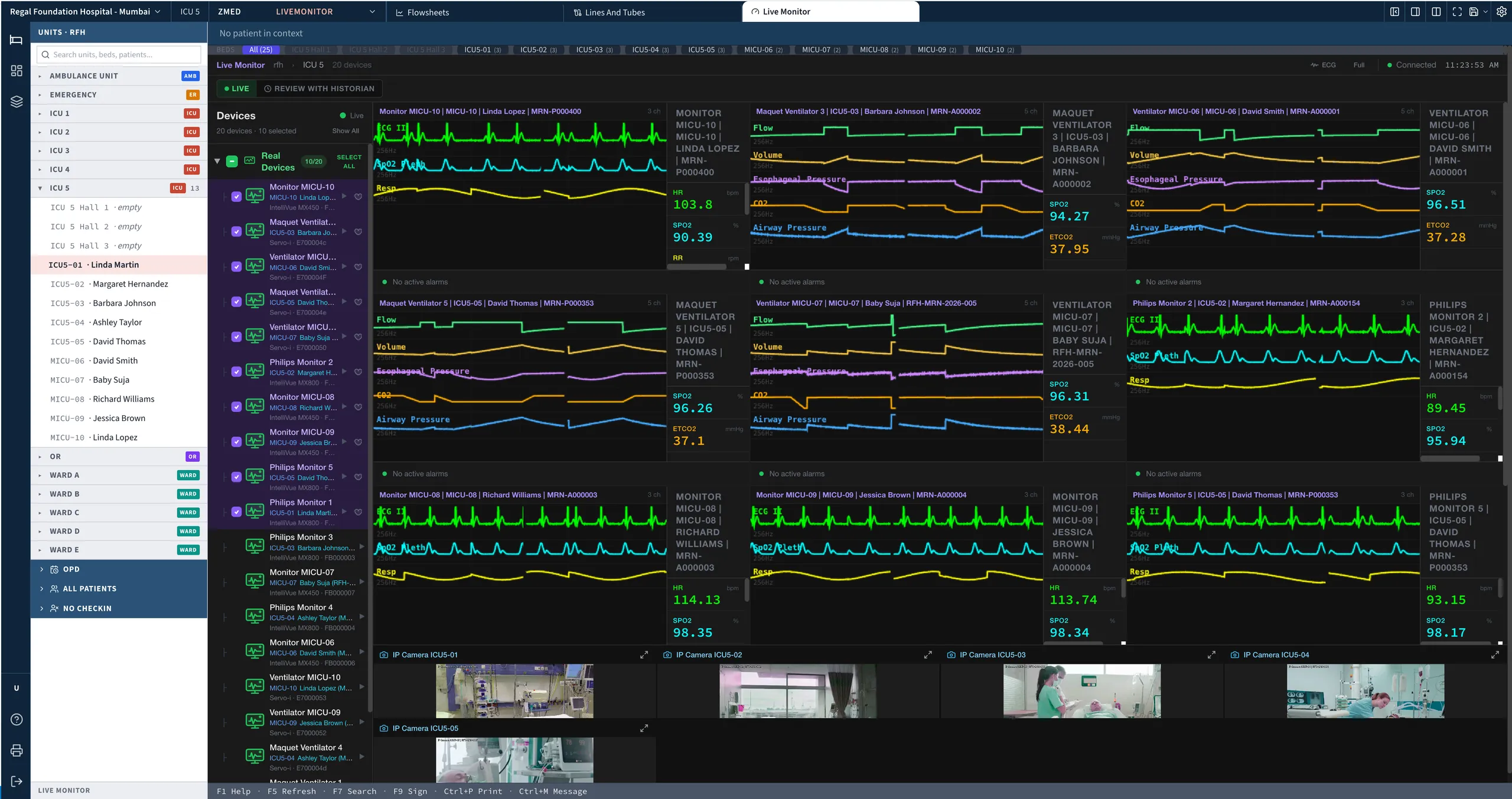
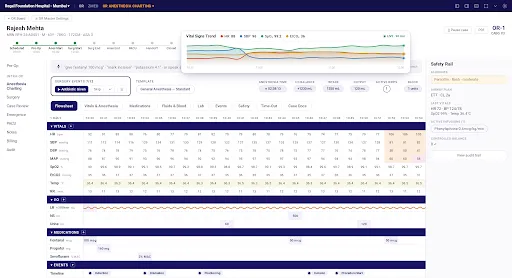
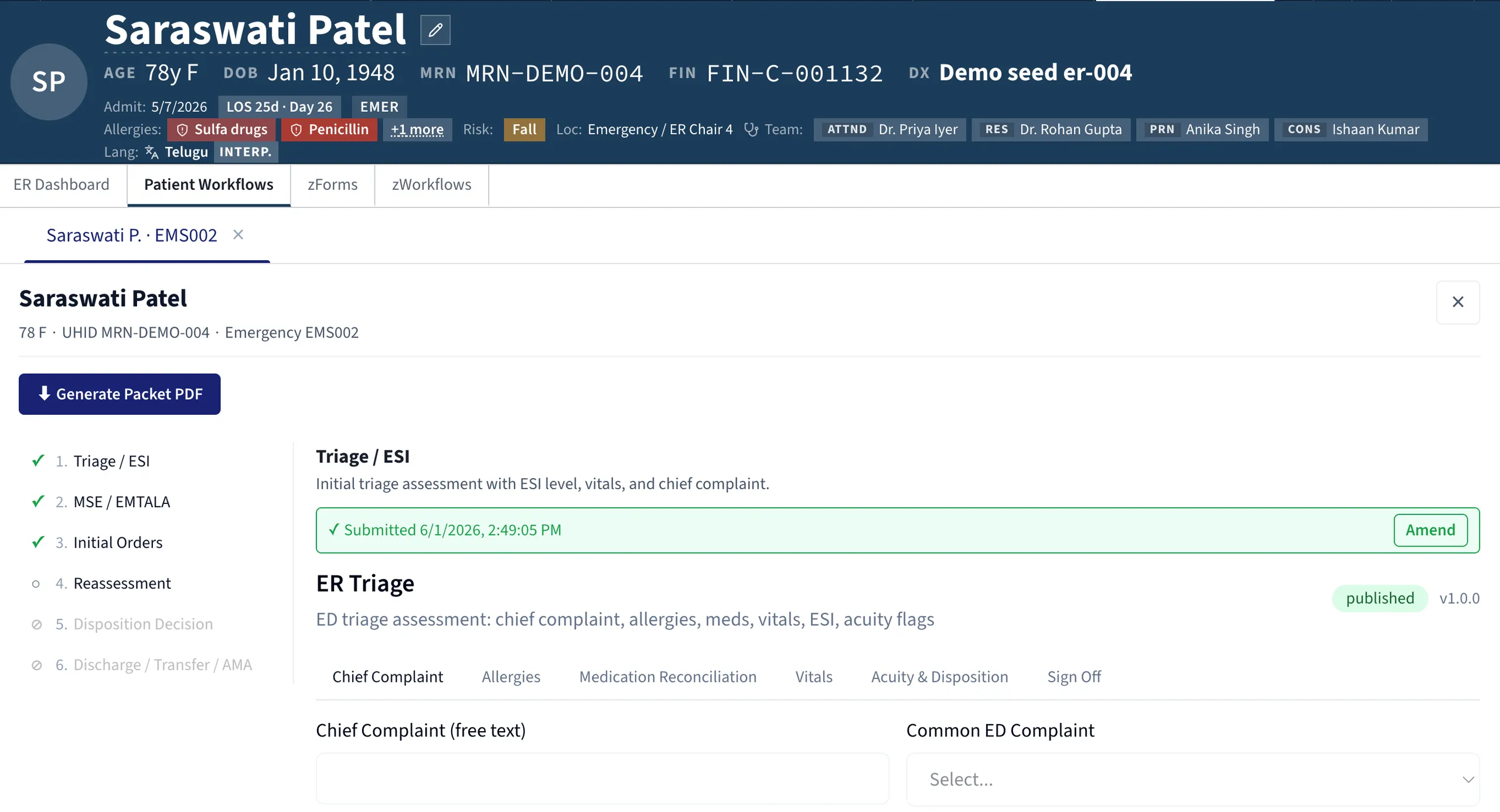
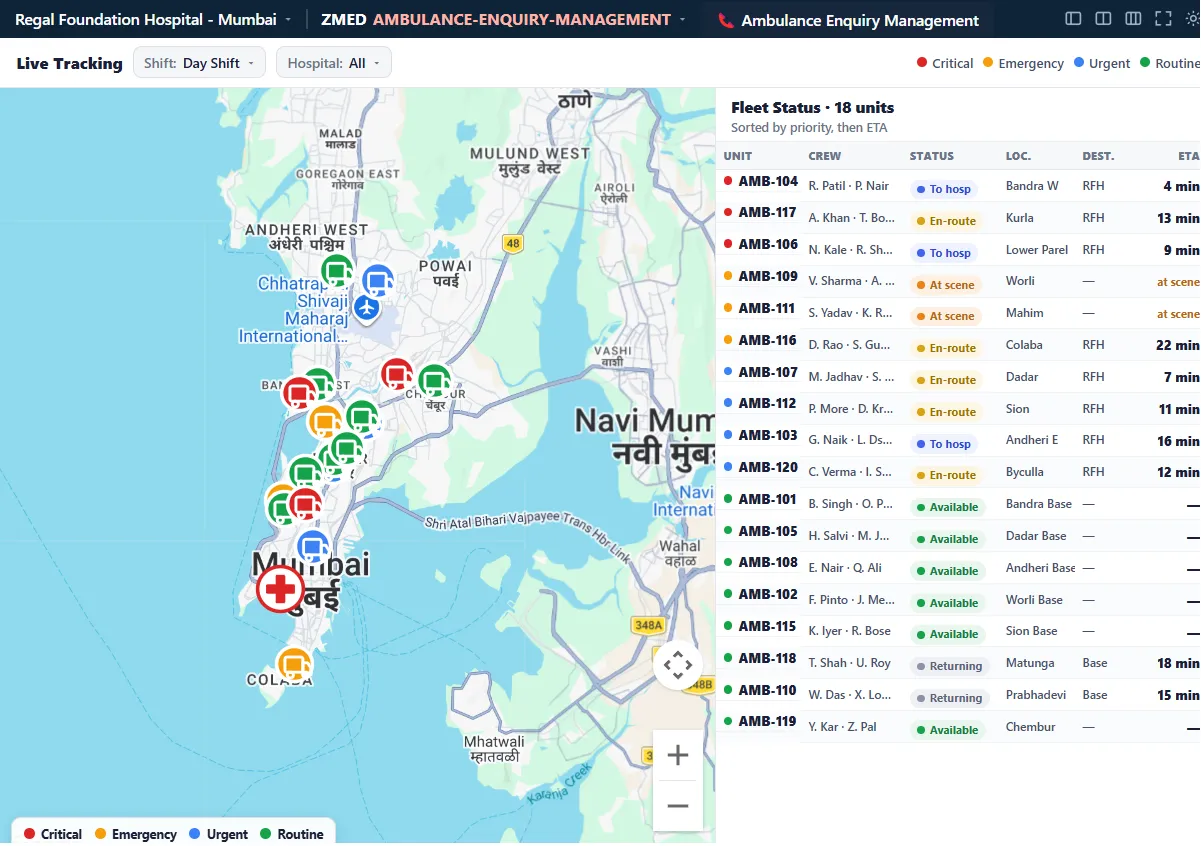
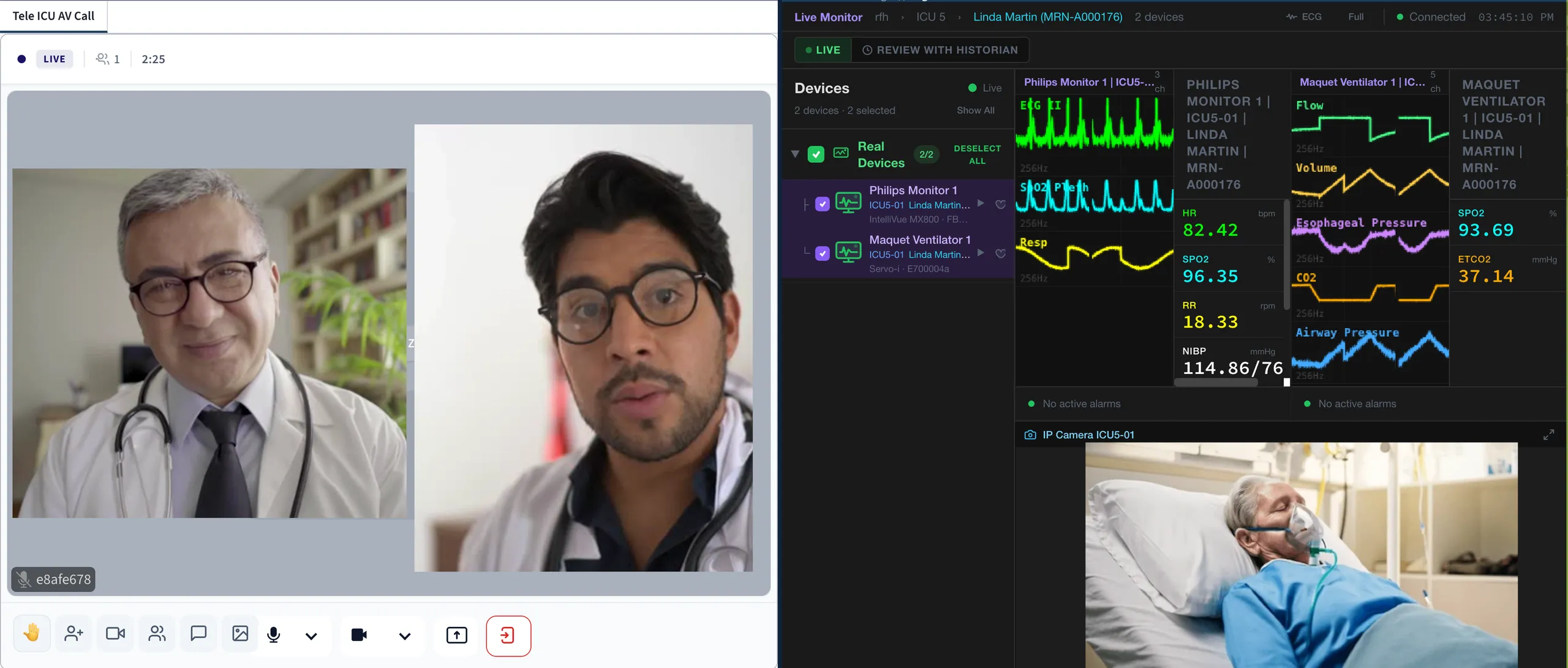
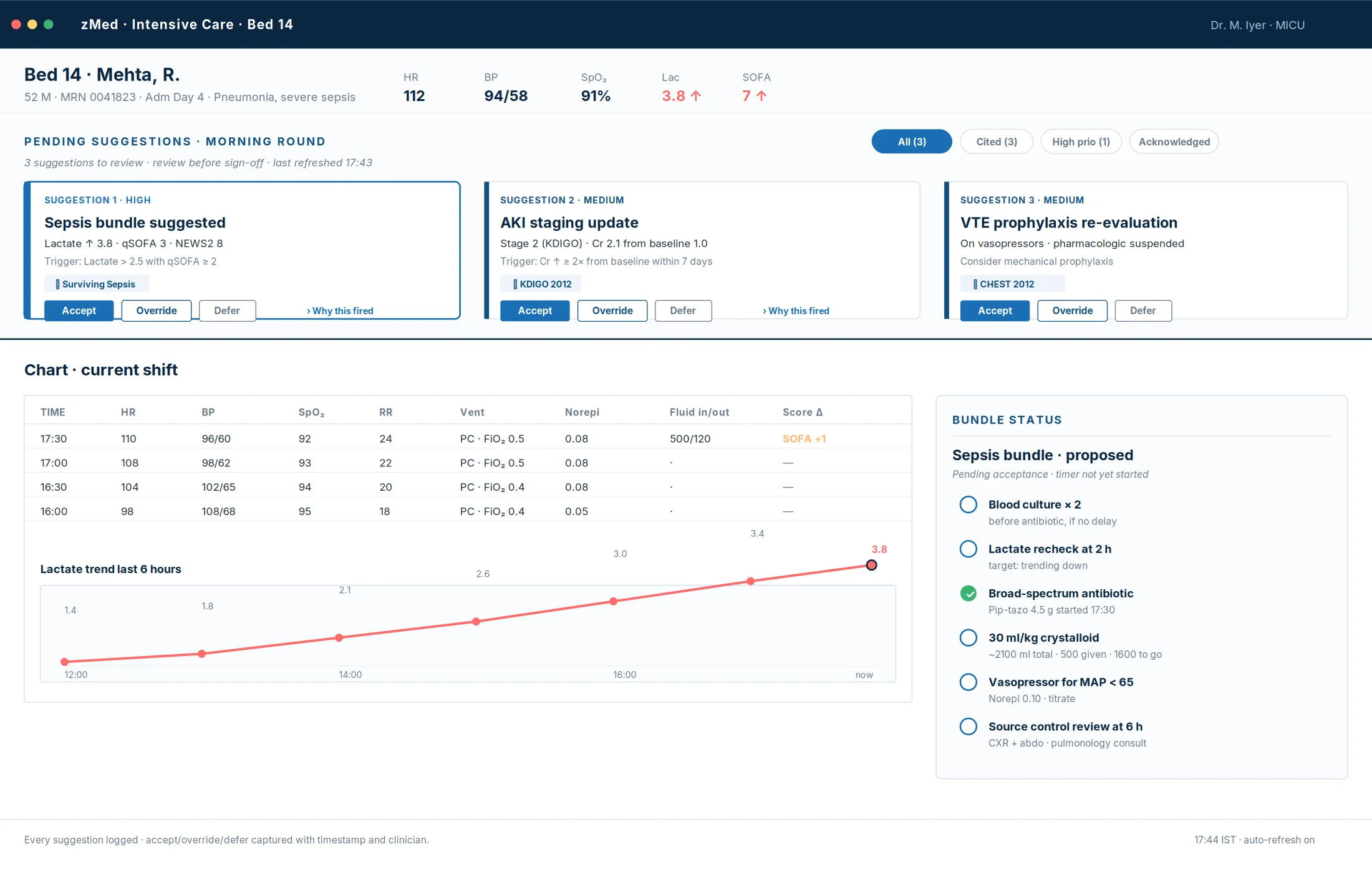
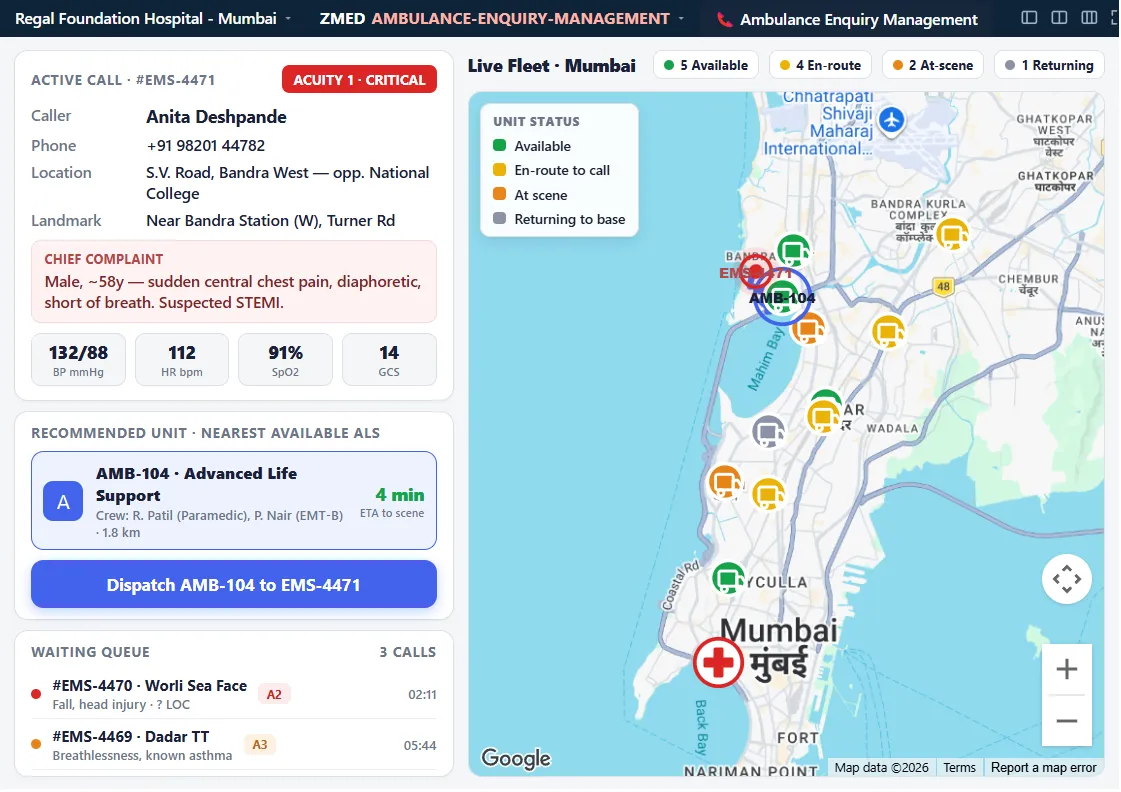
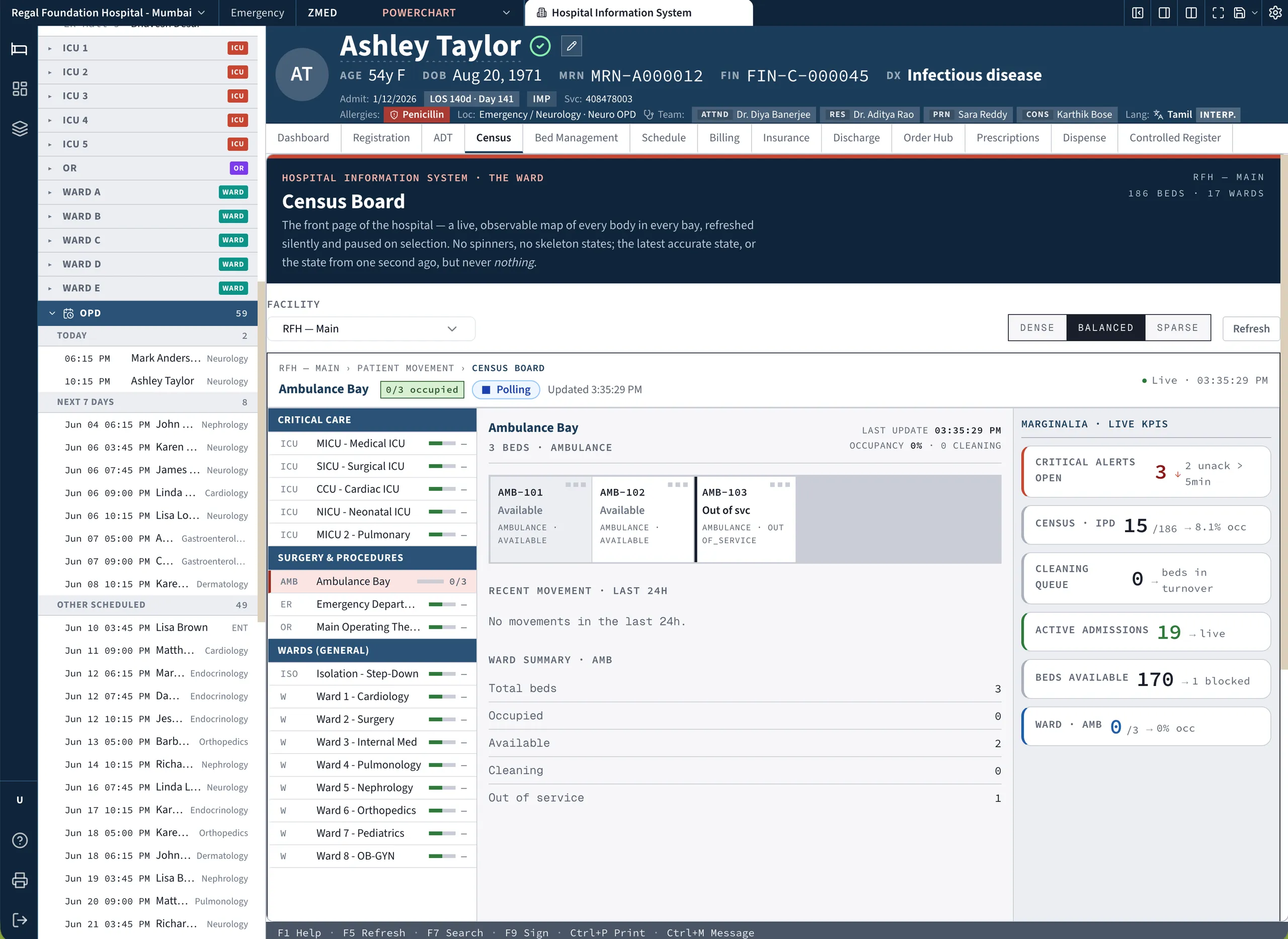
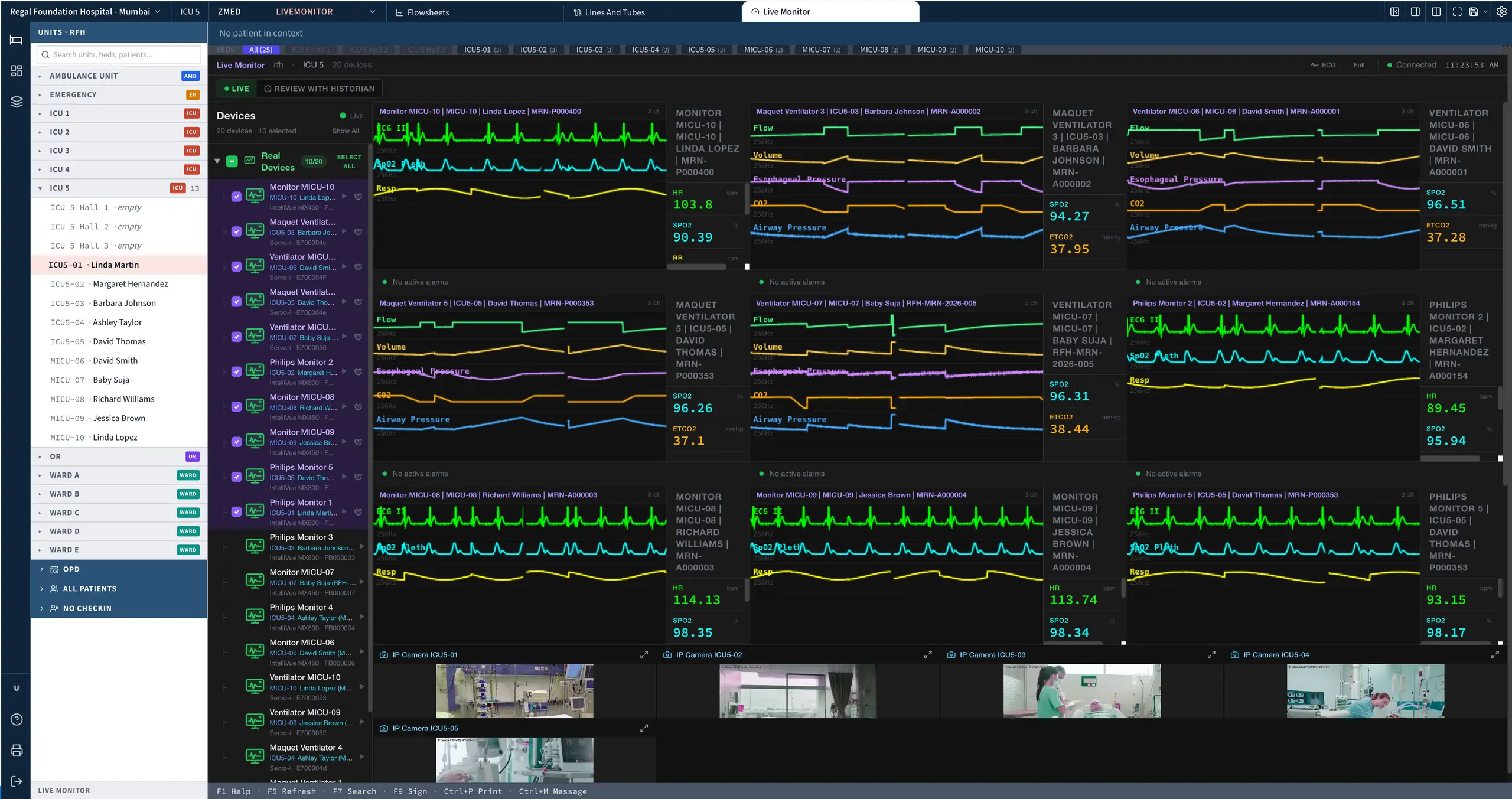
zMed Live Monitor — a full ICU bay of patient tiles with live ECG, ventilator and SpO2 waveformszMed ICU flowsheet — vitals trends, ventilator settings, infusions and live score recalculationzMed anaesthesia flowsheet — trend curves, drug log and event markerszMed emergency triage — acuity, complaint and vitals captured at the doorzMed ambulance live tracking — fleet positions, dispatch status and crew vitals streaming ahead to the ERzMed tele-ICU command centre — patient tiles across multiple hospitals

By Design

HIPAA GDPR HL7 FHIR ABDM

Certification Pathway

HITRUST SOC 2 Type II FedRAMP

Audit Workflows Supported

JCI NABH TJC ACHC

Denotes platform support and design alignment, not certification, unless separately stated.

300,000+ patients 100,000+ surgeries India + Middle East + US + ROW-Global Market ICU + OR + ER + Tele-ICU deployments

For your hospital

One platform. A path for every role.

300,000+
critical-care patients
60–85%
alarm load reduction
4–6h
sepsis surfaced pre-clinical
Weeks
to go-live, not months

How zMed works

From device data in, to decisions out.

Three moves, one record: capture everything at the bedside, turn it into a living chart, and surface what's about to happen — before it does.

01 · Capture

Every device speaks to the chart.

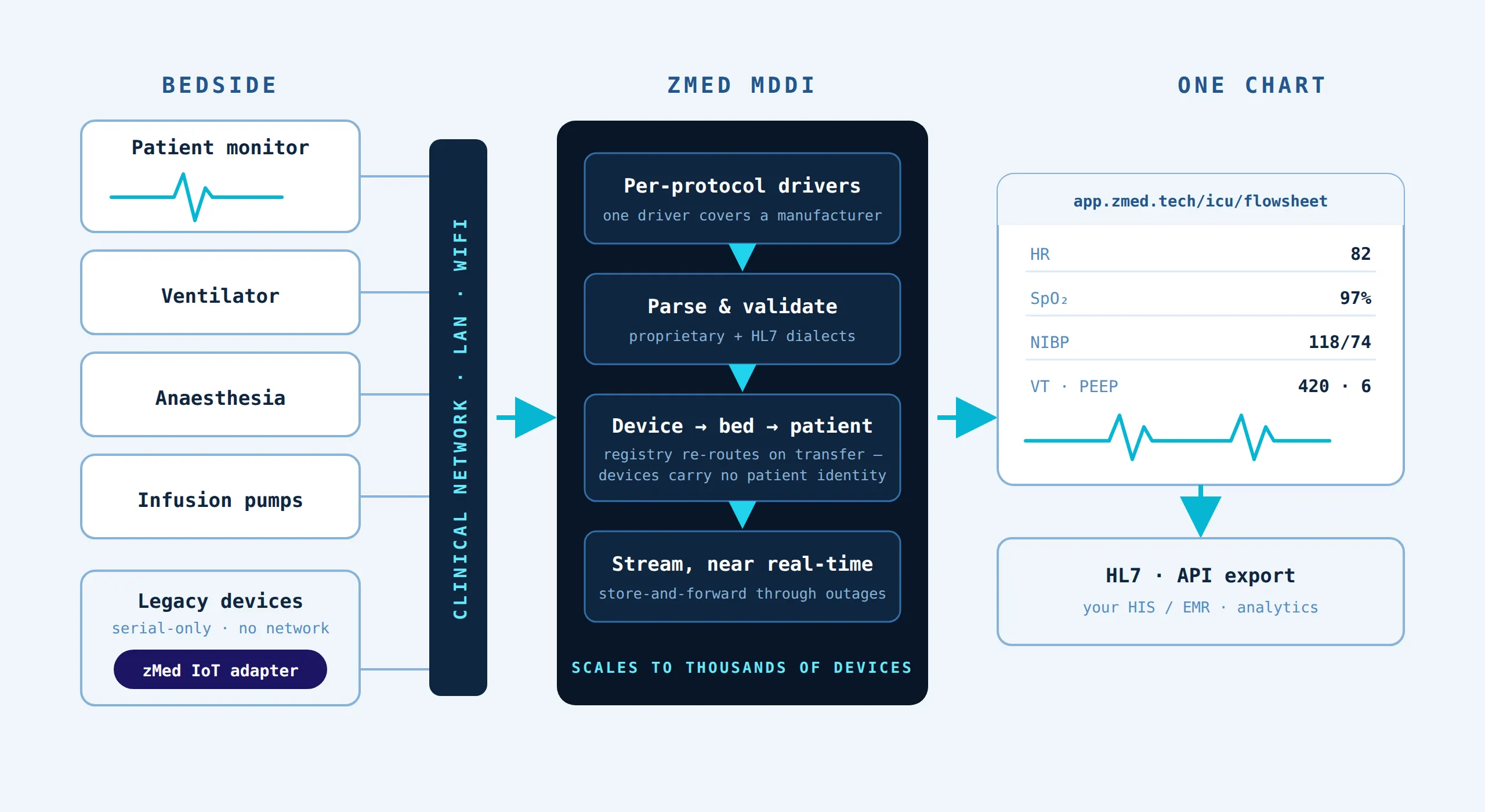
Bedside monitors, ventilators, infusion pumps, dialysis and anaesthesia machines stream continuously into the record — waveforms included, nothing re-keyed, every value traceable to source. Legacy serial-port devices join over zMed's adapters.

zmed.tech/mddi
zMed MDDI — bedside devices stream over the clinical network through per-protocol drivers into one live chart with HL7 and API export

02 · Chart

The flowsheet writes itself; clinicians chart by exception.

One living flowsheet per patient — vitals, ventilation, infusions, fluid balance — recalculating twelve clinical scores as data arrives, with the full citation behind every value. Adult, paediatric and neonatal units run on the same engine.

app.zmed.tech/icu/flowsheet
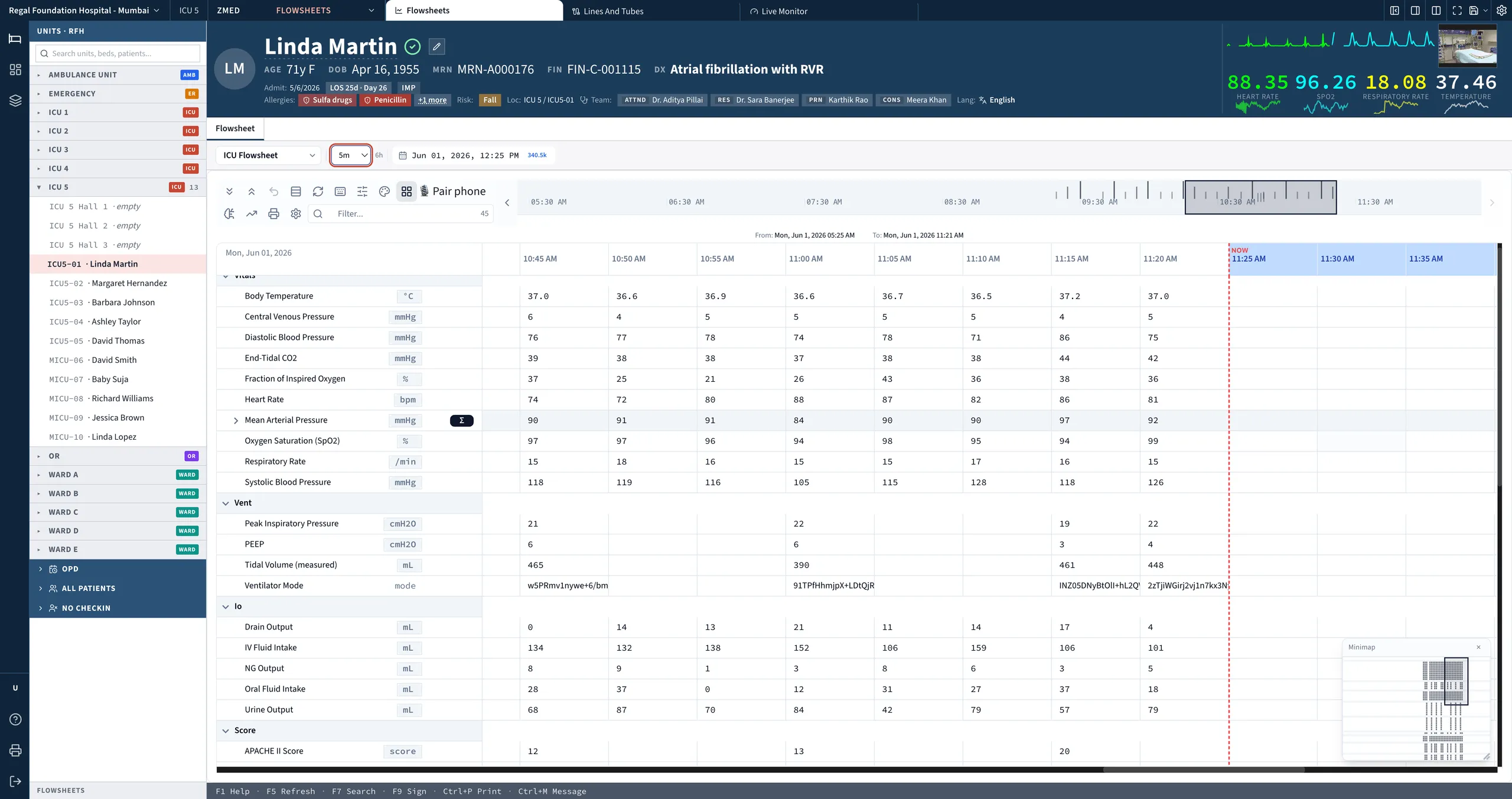
zMed ICU flowsheet with vitals trends, ventilator settings, infusions and live score recalculation

03 · Foresee

Risk surfaces as the trend bends — not at the morning round.

Hospital-owned rules and the Clinical AI models fire the moment the chart holds the data they need: sepsis bundles, deterioration escalation, smart alarms. Every suggestion is explainable, advisory only, and one tap from override.

app.zmed.tech/cds
zMed clinical decision support lane with pending suggestions surfaced inline at the point of decision

By unit

One platform. Every unit.

Pick the unit you run — the screens below are the live product, not mockups.

Every bedside signal, read every minute

One living flowsheet that ingests every monitor, pump and ventilator, recalculates twelve scores continuously, and keeps the whole unit in view.

See the ICU module
app.zmed.tech/icu/flowsheet
zMed ICU flowsheet with vitals trends, ventilator settings, infusions and a live SOFA recalculation

zMed Clinical AI

Explainable. Advisory. Human-in-the-loop.

There is no separate AI product. zMed's Clinical AI works inside the workflows clinicians already use — and the clinician is always in control.

Predictive models
Continuous deterioration, sepsis and readmission risk, surfaced in the live chart 4–6 hours before it's clinically obvious.
Real-time signal analysis
Waveforms analysed as they stream — lethal rhythms, ventilator asynchrony, perfusion trends — every finding landing in the flowsheet.
Smart drafting
Discharge summaries, operative notes and shift handovers drafted from the structured data the chart already holds.
Inline assistance
Decision support during charting and ordering — every suggestion explainable, every one overridable.

Explainable · Advisory only · Human-in-the-loop · Audit-logged

Explore zMed Clinical AI
zMed Clinical AI companion on a phone — structured charting on the move

Mobile companion

Service models

Three ways to deploy

Match the deployment to the hospital. Small units go live in weeks on Cloud; large systems embed zMed into an existing IT estate with Enterprise; intensivist groups run multi-site tele-critical-care with Command Center.

zMed Cloud

5 – 100 beds

Pay per patient-day

  • SaaS deployment — no on-premise hardware beyond the bedside cable
  • Pay-as-you-use — bill tracks patient days, not seats
  • Single connectivity box per unit, self-install
  • Mobile app for clinicians, on-call physicians, and administrators
  • Typical go-live in weeks, not months
Launch in your Hospital

or talk to sales

Enterprise

100+ beds, multi-unit, multi-location

Licensed per bed

  • On-premise or managed cloud — your choice
  • Integration with your existing EMR, HIS, LIS, RIS, and PACS
  • Multi-site, multi-unit, multi-specialty deployments
  • Dedicated implementation team and 24×7 support
  • Data residency controls for regulated geographies
Book a working session

or explore a sandbox first

Tele-ICU & Command Center

Physician groups, multi-hospital networks

Revenue-share with partner physician group

  • Built for intensivist groups running tele-ICU services
  • One command-centre view across every connected hospital
  • Audio and video with the bedside team, logged and audited
  • Co-branded deployments with partner physician groups
  • Outcome reporting for payers and contracting hospitals
Launch in your Hospital

Full deployment topologies — on-premises, sovereign cloud, hybrid, and the edge appliance — explained here →

RBAC One audit log Encryption Data residency Security & compliance → Deployment →

In deployment

Proven where minutes matter.

Deployed in tertiary ICUs, cardiac centres and multi-site networks across India and the Middle East — 300,000+ critical-care patients and counting.

Some examples from our deployments

28-bed tertiary ICU · Middle East

The ICU that stopped re-keying

100%
device vitals into the chart, no re-entry
60–85%
reduction in alarm load
12
clinical scores recalculated continuously
Weeks
from kickoff to big-bang go-live

A multi-specialty tertiary centre replaced paper flowsheets and manual vitals transcription across its intensive care unit. Every monitor, ventilator and infusion pump now streams into one living flowsheet; smart alarm suppression cut the unit’s alarm load by more than half, and continuous SOFA, NEWS2 and sepsis scoring surfaces deterioration hours earlier than the paper round ever did.

The challenge

The unit ran the way most tertiary ICUs still do: a paper flowsheet at the end of every bed, and a nurse copying monitor readings onto it every hour. Ventilator settings were transcribed at handover. Infusion rates were written down when they changed — if the moment allowed. Severity scores were worked out by hand at the morning round, from observations that were already hours old by the time the team discussed them.

The cost was not only nursing time. Transcription is where errors creep in, where a continuous trend gets flattened into a single hourly value, and where early deterioration hides between entries. And with every monitor, ventilator and pump alarming independently into the room, the unit’s soundscape had become something staff had learnt to tune out — which is exactly the danger alarm fatigue poses.

The deployment

zMed connected every bedside device in the unit — patient monitors, ventilators and infusion pumps — directly into one living flowsheet. Observations stream in continuously and land in the chart as they happen, so the nurse’s role changed from transcribing values to validating them: charting by exception instead of copying numbers the chart already holds.

Alarm management was tuned to the unit’s own thresholds and escalation rules, suppressing the nuisance alarms that had trained everyone to stop listening while making the genuinely urgent ones impossible to miss. Twelve clinical scores — SOFA, NEWS2 and sepsis screening among them — now recalculate continuously as new observations arrive, rather than once per round when someone finds time for the arithmetic.

Parenteral nutrition moved into the chart too. TPN prescriptions are calculated from the patient’s current weight, fluid balance and labs already in the record — composition worked out in the chart instead of on a calculator at the nursing station, with every prescription documented against the data that justified it.

The go-live was big-bang: all twenty-eight beds switched to the living flowsheet together, weeks from kickoff — no months of running paper and screen side by side. Nursing, medical and biomedical teams were trained at the bedside in the run-up, on their own unit, rather than in a classroom, so the cutover day changed the chart, not the routine. A device-status view gives the biomedical team the same picture the clinicians see: every connected device, every bed, at a glance.

What changed

The unit measures the difference in four numbers.

100% of device vitals reach the chart with no re-entry. Nothing is transcribed and nothing is lost between hourly entries; the trend a clinician sees at the bedside is the trend in the record.

Alarm load fell by 60–85%. Fewer interruptions per shift, and the alarms that do sound carry meaning again. The unit is quieter, and the quiet is clinically safer than the noise was.

Twelve clinical scores stay continuously current. Deterioration the paper round would have caught at eight in the morning now surfaces hours earlier, while there is still time to act on it.

Big-bang go-live, weeks from kickoff. The unit did not run a year-long IT programme — every bed went live on the same day, with the team trained and the devices connected ahead of the switch. Clinical confidence was won in the preparation, not stretched over a phased rollout.

Behind the numbers sits a quieter change: nurses spend their hour at the bedside on the patient, not on the paperwork about the patient.

What the team says

The head of critical care puts the change in terms of the daily round:

“The chart is simply there when I round. The scores are current, the trends are visible, and my nurses chart by exception instead of transcribing monitors.”

That is the whole shift in one sentence. The round no longer begins by reconstructing the night from hourly entries; it begins from a chart that is already current, with scores already computed and trends already drawn. The conversation at the bedside starts where it should — with what to do next, not with what the numbers were.

“The chart is simply there when I round. The scores are current, the trends are visible, and my nurses chart by exception instead of transcribing monitors.”

Head of Critical Care, 28-bed tertiary ICU

Multi-site acute-care network · West India · Major metropolis

One platform from ambulance to OR

4
care settings on one record — ER, OR, ICU, ambulance
1
audit log across the patient journey
4–6h
earlier sepsis foresight, pre-clinical
100k+
encounters on the platform

A hospital network running emergency, operating theatres, intensive care and its ambulance fleet on zMed: the chart opened in the field reaches the ED before the patient does, the anaesthesia record auto-populates in theatre, and the same record follows the patient to the ICU and through discharge — one record, one audit trail, end to end.

The challenge

A patient who arrives by ambulance, passes through the emergency department, goes to theatre and recovers in intensive care has — in most acute networks — passed through four record systems and at least three verbal handovers. Every doorway meant re-telling and re-keying: the crew’s observations dictated to the triage nurse, the ED notes summarised for the anaesthetist, the theatre record reconstructed for the ICU team. Each retelling loses detail, and each system boundary breaks the audit trail. When the network’s leadership asked a simple question — what happened to this patient, from first contact to discharge? — the honest answer had to be assembled by hand from four places.

The deployment

The network put all four care settings on one record. The chart opens in the ambulance: crew observations, interventions and timings are captured in the field and reach the emergency department before the patient does, so triage begins from real data rather than a blank screen. In theatre, the anaesthesia record auto-populates within the same patient context, and the record then follows the patient into intensive care and through to discharge without a single re-key.

Above the individual encounter sits the network view. A tele-ICU command centre lets senior intensivists watch monitored beds across sites from one screen, and a live census shows occupancy and patient flow across the whole network in real time rather than in a morning report. Continuous sepsis surveillance runs across the record itself, flagging patients before clinical signs declare themselves at the bedside.

The rollout moved setting by setting — emergency first, then theatres, then intensive care, then the fleet — so each team went live on a record that its upstream colleagues were already writing into.

What changed

Four care settings on one record. ER, OR, ICU and ambulance share a single chart. The handover conversation still happens — but it confirms what the receiving team can already read, instead of being the only copy of it.

One audit log across the patient journey. Every entry, every clinician, every timestamp in a single trail from first contact to discharge. Quality reviews and audits that once meant reconciling systems now mean reading one record.

4–6 hours of earlier sepsis foresight, pre-clinical. Because the record is continuous across settings, surveillance never loses sight of the patient at a transfer — the hours when deterioration most often slips through.

100k+ encounters on the platform. This is not a pilot ward. It is the network’s working record, at metropolitan volume, across every acute setting it operates.

What the team says

The feedback from the floor is consistent across settings, and practical rather than technical. Emergency nurses describe preparing for a patient they can already see — vitals, interventions and timings from the field on screen before the vehicle arrives. Anaesthetists describe a theatre record that is ready when the patient is, rather than one built from scratch at induction. Intensivists say the history is simply there: what was given in the ambulance, what happened in the ED, what was done in theatre, in one continuous chart. And the quality and audit teams — usually the last to benefit from any clinical system — describe answering in minutes the journey-level questions that used to take days of reconciliation.

Emergency & pre-hospital network · West India · Metropolis

The ER that knows the patient before the doors open

Before arrival
patient vitals visible to the ER team
Minutes
door-to-triage, measured on every case
100%
medico-legal cases with complete statutory documentation
Weeks
from kickoff to first live ambulance

An emergency and pre-hospital network in a West Indian metropolis runs its ambulance fleet and emergency department on one record: the enquiry call becomes a tracked dispatch, the crew’s chart travels ahead of the vehicle, and the ER receives a patient it already knows.

The challenge

In a large metropolis, the gap between an emergency call and definitive care is paved with phone calls. The enquiry desk took calls on one system — or on paper. The dispatcher chose a vehicle without seeing where the fleet actually was. The crew radioed ahead if the line held, and the ER met the patient at the door knowing little more than a one-line summary. Vitals taken in the vehicle were taken again from scratch at triage, and the minutes between the door and first clinical contact were nobody’s number — unmeasured, so unmanaged.

Medico-legal cases — a substantial share of any metropolitan emergency workload — carried a further burden: statutory documentation depended on individual diligence under pressure, with gaps discovered only when the records were demanded later.

The deployment

The network put the whole pre-hospital pathway on one record. An enquiry call becomes a dispatch on a single screen: the desk captures the caller’s details once, the dispatcher sees every vehicle live on the map and assigns the nearest appropriate ambulance, and the job — with its timings — is part of the record from the first ring.

En route, the crew charts into the same record the hospital uses. That is the chart-ahead handoff: the vitals, interventions and trend recorded in the vehicle are visible to the ER team before arrival, so the receiving team watches the patient approach on the map and prepares the bay to match what the numbers show — not to a guess.

At the door, triage runs with acuity banding, and door-to-care clocks start automatically on every case, so the department manages its minutes rather than estimating them. For medico-legal cases, the statutory workflow is built into the chart itself: the required documentation is completed as care proceeds, not reconstructed from memory after the shift.

The first ambulance went live within weeks of kickoff, and the fleet followed vehicle by vehicle — each crew trained on its own vehicle, on real runs.

What changed

Patient vitals visible to the ER before arrival. The handover begins before the doors open. The receiving team confirms what it has already read, instead of hearing it for the first time in the corridor.

Door-to-triage measured in minutes, on every case. Not sampled, not audited retrospectively — clocked automatically on every arrival, so the department can see its own performance shift by shift and act on it.

100% of medico-legal cases with complete statutory documentation. Because the workflow is part of the record rather than a parallel form, completeness stopped depending on how busy the night was.

Weeks from kickoff to first live ambulance. The network proved the pathway on one vehicle and one department, then scaled — no long programme standing between decision and benefit.

What the team says

The head of emergency medicine for the network describes the change at the door:

“We used to meet the patient at the door and start from zero. Now the team has read the vitals, seen the trend and prepared the bay before the ambulance turns into the gate.”

Starting from zero is the old default of pre-hospital care: whatever happened in the field arrived as a verbal summary, compressed and perishable. What the team values most is not any single screen but the removal of that reset — the patient’s story now arrives intact, ahead of the patient, and the first minutes in the department are spent treating rather than re-asking.

“We used to meet the patient at the door and start from zero. Now the team has read the vitals, seen the trend and prepared the bay before the ambulance turns into the gate.”

Head of Emergency Medicine, metropolitan acute-care network

FAQ

Questions hospitals ask

Why zMed?

One comprehensive platform for the whole hospital — ICU to OR to ER to the back office — on one record and one audit log. It's built around the devices you already own and the way clinicians actually work, the AI is explainable and owned by your hospital, it runs in the cloud or fully on-premise, and it goes live fast. zMed has touched the lives of 300,000+ critical-care patients.

Which units does zMed cover?

ICU and critical care, the operating room and anaesthesia, emergency/ER, ambulance and pre-hospital, tele-ICU and command centre, the hospital information system and ERP, clinical decision support, and zMed Clinical AI — all on one platform, one record, one audit log.

How is zMed deployed in a hospital?

Three ways: zMed Cloud for units of 5–100 beds (SaaS, pay per patient-day, live in weeks); Enterprise for 100+ beds (on-premise or managed cloud, integrated with your existing systems); and a Tele-ICU & Command Center model for physician groups and multi-hospital networks. Technically, zMed runs on-premises, in sovereign cloud, hybrid, or with a per-unit edge appliance that keeps the chart available through network incidents.

What's the return on investment?

zMed gives clinicians their time back — teams chart by exception instead of re-keying, and smart alarm suppression cuts alarm load by 60–85%. It surfaces deterioration and sepsis 4–6 hours before they're clinically obvious, so teams intervene earlier. And it replaces two systems with one — clinical and administrative on a single record, with charge capture driven straight from the chart.

How does zMed capture data from our bedside medical devices?

Through zMed's medical device data integration layer, which connects directly to patient monitors, ventilators, infusion pumps, dialysis machines, and anaesthesia machines and streams their data — including waveforms — into the chart in real time. It's manufacturer-agnostic, so it works with the mix of devices you already own. For older devices that have only a serial port and no network, zMed provides serial-to-WiFi adapters that bring them onto the network, so even legacy equipment streams into the chart — nothing re-keyed, every value traceable to source.

How is patient data protected in the AI?

Privacy is the cornerstone of zMed's AI. Models run in a secure environment and are fitted on your hospital's own data, and your patient data is never used to train shared or third-party models. When a request is sent to a cloud AI model, protected health information is first redacted and de-identified by automated PII-detection tooling, so patient identifiers never leave your environment. Every prediction is advisory only and audit-logged, access is role-based, and deployments are HIPAA-aligned with data-residency options — including fully on-premise AI where nothing leaves the hospital at all.

All questions hospitals ask →

Launch in your hospital

We'll show you a live deployment, run through the workflows that matter to your unit, and answer every question your IT and compliance teams will ask.